

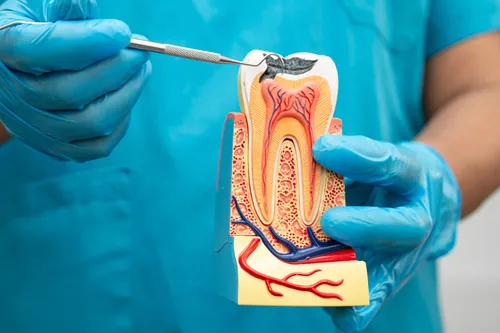
A Closer Look at Root Canal Retreatment
Root canal retreatment is recommended when a previously treated tooth does not heal as expected or develops new problems over time. Although root canal therapy has a high success rate, factors such as complex root canal anatomy, delayed placement of a crown, or new decay can allow bacteria to reenter the tooth.
During retreatment, the existing filling materials are removed, the root canals are carefully cleaned and disinfected, and the tooth is refilled and sealed. This process allows the tooth another opportunity to heal and remain functional.
The Benefits of Root Canal Retreatment
- Preserves the natural tooth: Helps avoid extraction and maintain natural chewing function.
- Relieves symptoms: Addresses pain, swelling, or infection associated with failed root canal treatment.
- Prevents further damage: Stops infection from spreading to surrounding bone and tissues.
- Avoids replacement procedures: May eliminate the need for implants or bridges.
The Root Canal Retreatment Process
Retreatment begins with a thorough evaluation, including X-rays, to determine the cause of the problem. If retreatment is recommended, existing restorations and filling materials are removed to allow access to the root canals.
The canals are then cleaned, shaped, and disinfected to remove bacteria and debris. Once the tooth is properly prepared, it is refilled and sealed. A new crown or restoration is placed to protect the tooth and restore strength and function.
What to Expect During Retreatment
Patient comfort and understanding are priorities at Birkdale Dental. Before treatment begins, Dr. Wing, DDS, will explain why retreatment is recommended, what the procedure involves, and how to care for your tooth afterward. Advances in technique and anesthesia allow retreatment to be performed comfortably for most patients.
Frequently Asked Questions About Root Canal Retreatment
Is root canal retreatment painful?
How successful is root canal retreatment?
What happens if I choose not to have retreatment?
Root canal retreatment can play an important role in saving a tooth that might otherwise be lost. At Birkdale Dental, Dr. Michael Wing, DDS, provides endodontic care focused on accuracy, comfort, and long-term oral health.
To learn more or to schedule a consultation in Huntersville, North Carolina, please call 704-997-8280.