

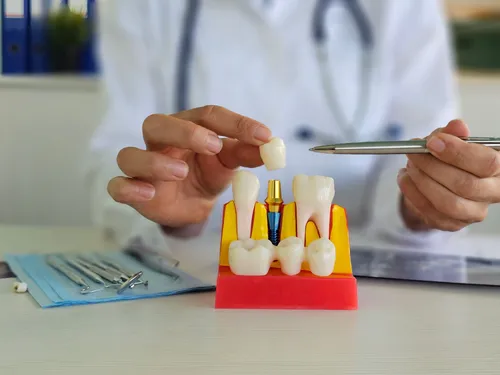
Understanding Dental Crowns
A dental crown is a custom-made covering placed over a tooth to restore its shape, size, strength, and appearance. Crowns are often recommended when a tooth has been significantly affected by decay, fracture, or previous dental work and cannot be adequately restored with a filling alone.
Dr. Michael Wing, DDS, evaluates each situation carefully and discusses whether a crown is the most appropriate option based on tooth condition, bite forces, and overall oral health.
Benefits of Dental Crown Treatment
- Protects weakened teeth: Crowns help prevent further damage or fracture.
- Restores function: Allows comfortable chewing and normal speech.
- Improves appearance: Crowns can enhance the shape and color of a tooth.
- Long-lasting solution: With proper care, crowns can provide durable results for many years.
The Dental Crown Treatment Process
Crown treatment typically involves two visits. During the first appointment, the tooth is prepared by removing decay and shaping it to support the crown. An impression is taken to create a custom restoration that matches your natural teeth. A temporary crown may be placed while the final crown is being made.
At the second visit, the permanent crown is fitted, adjusted, and secured. Dr. Wing ensures the crown feels comfortable and functions properly before final placement.
What Patients Can Expect Before and After Treatment
Some mild sensitivity may occur following crown placement, but this usually resolves quickly. Maintaining good oral hygiene and attending regular dental visits help protect the crowned tooth and surrounding structures over time.
Frequently Asked Questions About Dental Crowns
How should a dental crown be cared for?
Can a tooth with a crown still develop decay?
Are there alternatives to dental crowns?
Dental crowns play an important role in restoring damaged teeth and preserving oral health. At Birkdale Dental, Dr. Michael Wing, DDS, provides restorative care for patients in Huntersville, North Carolina with a focus on comfort, accuracy, and long-term stability.
To learn more or schedule an appointment, please call 704-997-8280.